Roof Repair · Wyoming
Crews follow a documented order that starts with surface mapping and ends with a joint walkthrough. This keeps decisions tied to what is actually found rather than assumptions, much like the approach used for emergency roof repair for Wyoming homeowners and roof maintenance in Wyoming.
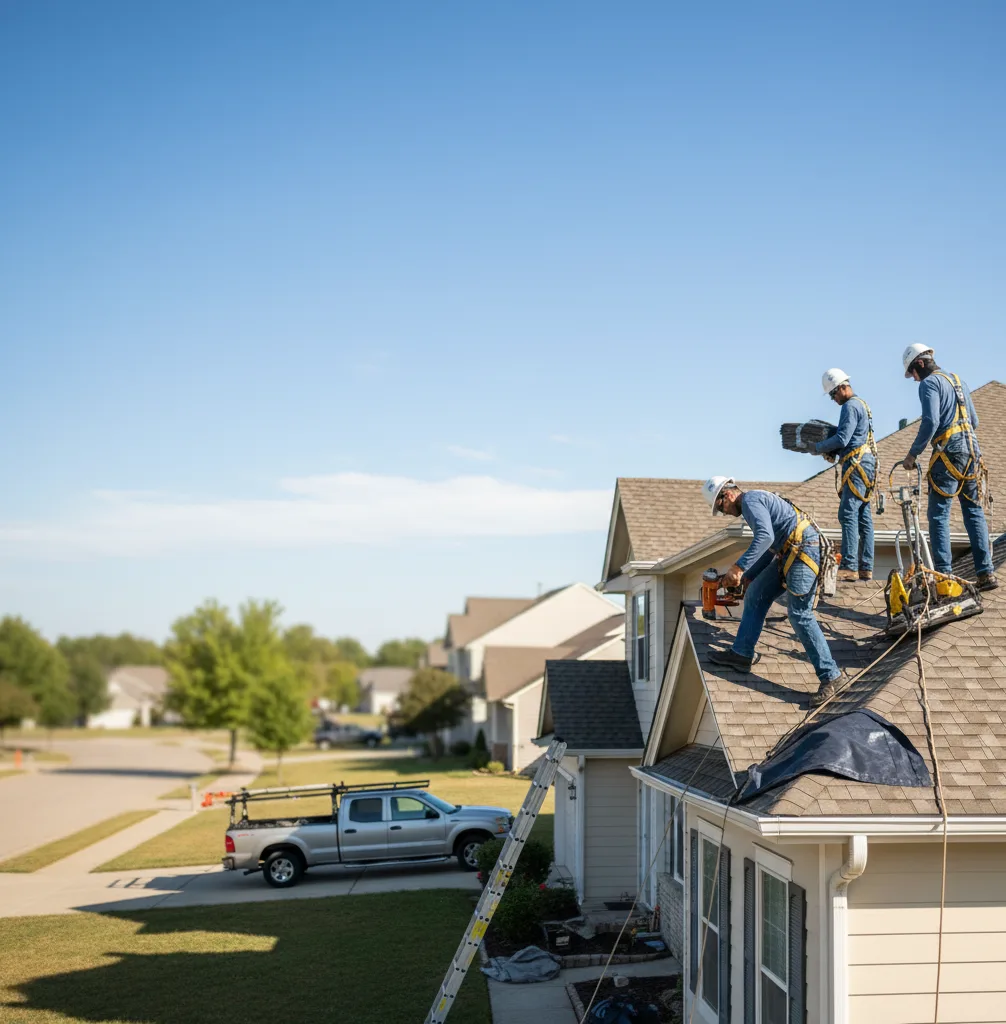
Storm events often combine high winds, heavy rain, and freeze-thaw cycles that stress roofing layers where such conditions occur. Crews start by walking every accessible surface and noting lifted tabs, granule loss, and punctures. They also inspect flashing around vents, chimneys, and valleys where water can enter after impact. Once the survey is complete, damaged sections are isolated so only compromised material is removed. New underlayment and shingles are installed to restore the original drainage pattern. The goal is a watertight surface that matches the surrounding roof in both function and appearance. Homeowners can check for missing granules in gutters or daylight visible from inside the attic as early indicators that roof inspection in Wyoming is needed.
Technicians probe decking with moisture meters to locate wet areas that extend beyond the surface damage. Saturated insulation or plywood must be replaced before new roofing is applied. In Wyoming, older homes may have multiple layers already present, which changes how much material is removed. The sequence keeps the structure dry at the end of each day so interior spaces remain protected. Final inspection confirms that fasteners, sealants, and ridge vents are secure against the next weather event, which is why many turn to roof leak repair in Wyoming after storms.
FAQ

Small problems can grow when water reaches the decking or insulation. An early check often limits the repair to the original area. If the roof is already older it is useful to know the overall condition before deciding how long to wait.
Interior water marks can come from roof issues but may also trace to plumbing or condensation in the attic. A roof inspection checks the surface and flashing first. If those areas are dry the source is often elsewhere. The inspection helps narrow it down before other trades are called.
Access, the number of layers already on the roof, and whether decking needs attention all affect the scope. Steeper pitches or limited ladder placement can add time. The inspection identifies these factors so the estimate reflects the actual work required.